
That “bargain” iPhone 14 you found on a social media marketplace might actually cost you R12,000 in repairs and heartbreak by next month. It is a common trap in a market where new devices often cost 47.5% more than global retail prices. You want the premium Apple experience without the R30,000 price tag, but the fear of buying a blacklisted or broken device is real. It’s stressful to scroll through listings wondering if the battery is degraded or if the handset was stolen. We understand that you need a reliable phone that just works without the constant anxiety of being scammed.
Understanding the certified pre-owned vs used iPhone South Africa debate is the only way to shop with total confidence. You’ll learn the critical differences between risk-heavy used devices and secure Certified Pre-Owned iPhones so you can protect your hard-earned money. We’ll guide you through the 2026 safety standards, from checking ICASA approval to ensuring your device supports the latest iOS 26 features. This guide breaks down the technical checks, legal protections under the Second-Hand Goods Act, and why battery health is the ultimate dealbreaker for your next upgrade.
Key Takeaways
- Understand why “Used” devices often carry hidden risks like blacklisting or hardware failure compared to professionally vetted alternatives.
- Discover the technical differences in the certified pre-owned vs used iPhone South Africa market to ensure you get a device that lasts.
- Learn which models still support the latest iOS 26 and iOS 27 updates to keep your tech current and secure for years to come.
- Master the 2026 safety checklist by learning how to verify IMEI numbers and “Parts and Service History” before you hand over any cash.
- Get the facts on battery health standards so you never end up with a device that needs a charger by lunchtime.
The Safety Debate: Is Buying a Pre-Owned iPhone Actually Risky in 2026?
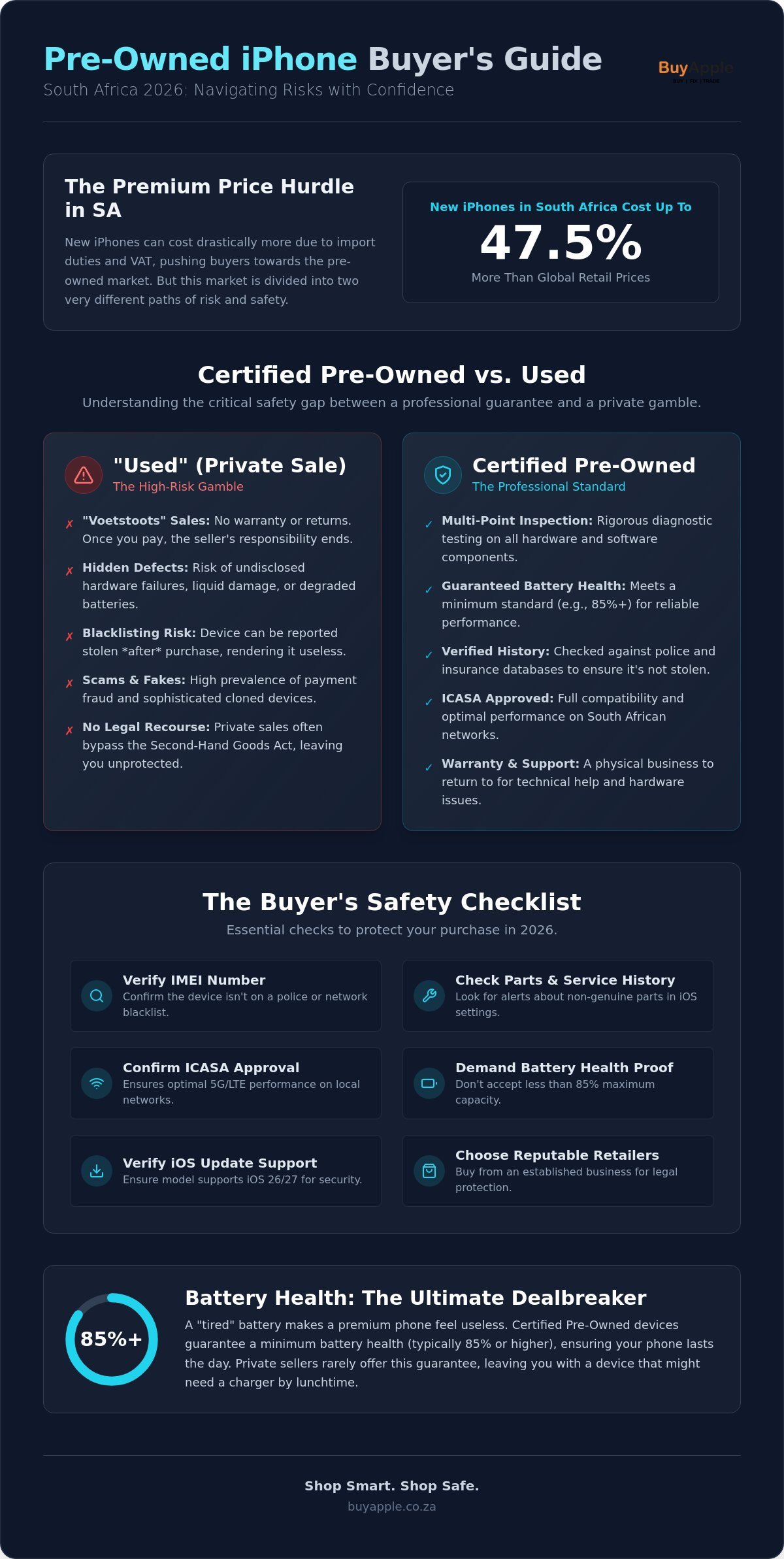
Buying a new flagship phone in South Africa has become a massive financial hurdle. With local prices sitting up to 47.5% higher than US retail due to import duties and VAT, the “Circular Economy” isn’t just a trend; it’s a necessity. More South Africans are choosing pre-owned devices to get premium tech without the staggering price tag. However, the market is split into two very different worlds. Choosing between a certified pre-owned vs used iPhone South Africa listing often comes down to who you trust. Is it a random seller in a parking lot or a professional retailer with a reputation to protect?
The risk isn’t about the Apple hardware itself. It’s about the lack of accountability in private sales. When you buy “used” from a classified site, you’re usually buying “voetstoots.” This means once the money leaves your hand, the seller’s responsibility ends. To understand the safety difference, you first need to know what refurbished means in a professional context. It’s the difference between a device that was simply wiped and sold, and one that was technically verified to meet factory standards.
The Reality of Private Sale Risks in SA
Private marketplaces like Facebook Marketplace and Gumtree are high-risk zones in 2026. Scammers have become incredibly sophisticated with EFT proof fraud and highly realistic “cloned” devices that look perfect but run on modified software. A common trap is the “delayed blacklist.” You meet in a safe zone, check the IMEI, and everything looks fine. Two days later, the original owner reports it stolen to their insurer, and the handset is remotely blacklisted by local networks. It becomes an expensive paperweight. These private deals lack the paper trail required by the Second-Hand Goods Act, leaving you with zero legal recourse when things go wrong.
Why Professional Retailers are the Safe Haven
Professional retailers remove the “gamble” from the equation. We use advanced diagnostic tools to catch hidden motherboard issues or liquid damage that a visual check would miss. Every device must be ICASA approved to ensure it works perfectly on South African networks. This guarantees your 5G and LTE bands are optimized for local cellular providers. When you look at the certified pre-owned vs used iPhone South Africa landscape, professional shops offer a physical business presence. If your iPhone 13 or iPhone 14 has a hardware glitch three weeks later, you have a place to go for support. It’s about buying a relationship and a guarantee, not just a piece of glass and aluminum.
- Verified History: Professional sellers check devices against national police databases.
- Network Stability: ICASA approval ensures your signal doesn’t drop during critical calls.
- Technical Support: Access to expert help if your iOS 26.5.2 update needs troubleshooting.
Certified Pre-Owned (CPO) vs. Used: The Technical Safety Gap
A “used” iPhone is essentially a mystery box. When you buy from a private seller, you get exactly what the previous owner left behind. There is no formal inspection. There is no technical guarantee. If the screen starts flickering or the charging port fails after three days, you’re on your own. In the certified pre-owned vs used iPhone South Africa market, “used” usually refers to a “voetstoots” transaction with zero technical vetting. You’re gambling your hard-earned Rands on a stranger’s honesty.
Certified Pre-Owned (CPO) is a professional standard, not just a marketing label. It involves a rigorous refurbishment process that restores the device to a like-new state. We use specialized diagnostic software to verify the authenticity of every internal component. This ensures you never see those frustrating “non-genuine part” alerts in your iOS settings. Technical verification is the only way to protect your consumer rights and ensure your device doesn’t fail when you need it most.
Inside the Multi-Point Inspection Process
Battery stress testing is our first priority. In 2026, a “tired” battery makes a premium phone feel like a burden. Every CPO device we sell meets a minimum of 80% battery health, though we aim for 85% or higher for peak performance. We also calibrate every sensor. FaceID, TouchID, and TrueTone must function exactly as they did on day one. Finally, we perform connectivity audits. We test 5G, Wi-Fi 6, and Bluetooth signal integrity to ensure your connection stays rock solid across South Africa’s networks.
The Warranty: Your Ultimate Insurance Policy
The warranty is the most important document you will receive with your purchase. A 6-to-12 month warranty is the industry gold standard for CPO devices. Private sellers simply cannot offer this level of protection. If a motherboard component fails or a software glitch occurs, a professional warranty covers the repair or replacement costs. This added security is a major factor when evaluating the iPhone 13 Price South Africa. You are investing in peace of mind, not just hardware.
Ready to find a device that has passed every test? Explore our certified iPhone range to see the quality for yourself. We prioritize transparency so you can shop with total confidence.
5 Common Myths About Pre-Owned iPhones Debunked
Social media forums are often filled with horror stories about second-hand tech. You’ve likely seen Reddit threads or local community posts claiming that every pre-owned device is a ticking time bomb. This noise makes the certified pre-owned vs used iPhone South Africa choice feel more complicated than it actually is. Let’s separate the myths from the reality of the 2026 market. Most fears about pre-owned Apple gear come from bad experiences with unverified private sellers, not professional retailers.
One of the biggest misconceptions is that these devices were all previously broken or water-damaged. That simply isn’t true. The majority of high-quality stock comes from corporate upgrades or trade-ins from users who simply want the latest model. Legitimate dealers in South Africa must follow the Second-Hand Goods Act 6 of 2009. This law requires us to register with the SAPS and keep strict records of every transaction. It’s a massive deterrent against the trade of stolen or faulty goods, providing a layer of protection you’ll never find on a street corner deal.
Addressing the Battery Health Anxiety
Don’t believe the myth that every pre-owned battery is “tired.” Professional resellers have strict thresholds. If a battery falls below 80% to 85% health, it’s replaced before the phone reaches the shelf. For a reliable daily driver in 2026, an optimal CPO device should maintain a minimum of 85% battery health to ensure peak performance. This means your iPhone 13 or iPhone 14 will easily outlast a brand-new, budget Android competitor with a cheaper, less efficient cell. We prioritize longevity because we know you need a phone that lasts from your morning coffee until your last scroll at night.
The Performance and Longevity Reality
Think pre-owned means outdated? Think again. Apple’s A-series chips are years ahead of the processors found in new budget phones. Even an older flagship remains snappy and responsive while running the latest iOS 26.5.2. iPhones typically stay viable for 5 to 7 years thanks to Apple’s industry-leading software support. If you’re wondering is the iPhone 13 still worth it in South Africa, the answer is a resounding yes. It handles modern apps and security updates with ease. Choosing a certified pre-owned vs used iPhone South Africa ensures you get a device that isn’t just “cheap,” but truly high-performing for years to come.
- Myth: No financing on used phones. Fact: Many CPO retailers offer flexible payment plans.
- Myth: No software updates. Fact: iOS 26 and 27 support models as far back as the iPhone 11.
- Myth: They are all “clones.” Fact: Professional diagnostic tools verify every internal component is genuine Apple hardware.
The 2026 South African Buyer’s Safety Checklist
You don’t need to be a technician to spot a bad deal. While the certified pre-owned vs used iPhone South Africa debate often focuses on price, your real priority should be verification. A professional retailer will encourage you to run these checks, whereas a scammer will try to rush the process. Use this 2026 safety guide to inspect any device before you commit your money. If you’re also planning to purchase remotely, our detailed guide on how to buy iPhone online South Africa safely covers every step of the secure digital transaction process.
- Verify the IMEI: Ask for the IMEI or Serial Number and enter it into Apple’s official Check Coverage site. This confirms the model and shows if the device has a valid purchase date or active support.
- Check Parts History: Open Settings > General > About. Since iOS 15.2, iPhones show a “Parts and Service History” section. If you see “Unknown Part,” the device has been repaired with non-genuine components.
- Disable Find My: Ensure the “Find My” Activation Lock is completely off. If a seller cannot log out of iCloud in front of you, the phone is likely stolen or managed by a previous owner.
- Look for Liquid Damage: Pop out the SIM tray and look inside the slot with a flashlight. If you see a pink or red sticker, the Liquid Contact Indicator (LDI) has been triggered. A white or silver sticker means it’s dry.
- Confirm SA Contact Details: Only buy from sellers with a physical South African address and a verifiable reputation. A WhatsApp-only “business” is a major risk.
30-Second Software Verifications
You can learn the entire history of a device just by looking at the model number. Go to Settings > General > About and look at the first letter of the model number. “M” stands for a brand-new retail device, while “F” indicates it was officially refurbished by Apple or a professional partner. If it starts with “N,” it’s a replacement device provided by Apple through a warranty claim. You should also look for ICASA stickers or documentation. This ensures the handset is optimized for South African network bands and won’t suffer from poor signal strength or dropped calls.
Red Flags to Avoid at All Costs
Trust your gut when a deal feels wrong. If the price is R3,000 lower than the current best value iPhone South Africa market rate, it’s probably a scam. Scammers often use “too good to be true” prices to lure in desperate buyers. Never pay a “holding deposit” via EFT before you have physically inspected the device. If a seller refuses to provide the IMEI number for a remote check, walk away immediately. They are likely hiding a blacklist status or a cloned serial number.
Stop gambling with private listings and choose guaranteed quality instead. Shop our verified iPhone collection today for a device that passes every safety check on this list.
Why BuyApple is the Safest Choice for Your Next iPhone
Choosing between a certified pre-owned vs used iPhone South Africa doesn’t have to be a stressful gamble. We’ve built our business on the belief that premium technology should be accessible without the fear of scams or hardware failure. While private marketplaces leave you unprotected, we take full responsibility for every device that leaves our shop. We don’t just sell phones; we provide a secure bridge to the Apple ecosystem for South Africans who value both quality and their hard-earned Rands.
Transparency is our core standard. Every listing on our site includes detailed grading and honest battery health disclosures. You won’t find any “mystery” devices here. We use secure South African payment gateways to protect your financial data, and we offer flexible financing options to suit your 2026 budget. Because we are a local business, our support team is always available to assist you in real-time. You aren’t dealing with a nameless global entity or a ghost seller on social media. You’re dealing with local experts who care about your satisfaction.
The BuyApple Quality Guarantee
Every device is hand-checked by our expert Apple technicians before it reaches our inventory. We go far beyond a simple factory reset. Our team performs a multi-point certification process that tests everything from logic board stability to the smallest microphone. This rigorous vetting is why our certified pre-owned Apple devices South Africa range is the gold standard for reliability. Our local warranty provides a safety net that no private “voetstoots” deal can match. If something isn’t right, we fix it. It’s that simple.
Ready to Upgrade Securely?
Finding the right balance between features and price is easy with the right data. If you’re torn between models, start by reading our iPhone 13 vs iPhone 12 South Africa guide to see which generation offers the best value for your needs. Our team is also ready to provide personalized advice if you’re unsure which handset fits your specific lifestyle. Don’t settle for the risks of the “used” market when you can have guaranteed excellence. Shop securely at BuyApple today and experience the peace of mind you deserve.
- Expert Vetting: Every iPhone 11, 12, 13, and 14 is technically certified.
- Local Support: Real South Africans helping you with setup and troubleshooting.
- Secure Payments: Safe ZAR transactions through trusted local providers.
- Full Warranty: Comprehensive protection against hardware defects.
Step Into the Future with Total Confidence
Buying a high-end device in 2026 shouldn’t feel like a gamble. You now have the technical tools to spot red flags and use our safety checklist to protect your budget. The choice in the certified pre-owned vs used iPhone South Africa market is clear. One side offers the high-risk uncertainty of private sales. The other provides the technical security of professional certification. You deserve a premium handset that supports the latest iOS 26 features without the fear of hidden defects or sudden blacklisting.
We’ve removed the stress from the shopping experience. Our process includes a rigorous 40+ point quality inspection to ensure every component meets factory standards. We use secure South African payment gateways to keep your financial data safe. Plus, our dedicated local customer support is always here to help you with any questions. Get the technology you want while keeping the peace of mind you need. Ready to upgrade? Secure your peace of mind; Shop Certified Pre-Owned iPhones at BuyApple. Your next favorite iPhone is waiting for you.
Frequently Asked Questions
Is it safe to buy a pre-owned iPhone from Facebook Marketplace in South Africa?
Buying from Facebook Marketplace is generally high-risk because there is no formal buyer protection or technical vetting. Scammers often use these platforms to sell blacklisted handsets or devices with “cloned” serial numbers that look genuine at first. You also lose the legal safety net provided by registered dealers who must comply with local second-hand goods regulations and record-keeping.
What is the difference between a used iPhone and a Certified Pre-Owned (CPO) iPhone?
A used iPhone is sold “voetstoots” with no formal inspection, meaning you accept all hidden faults. When evaluating the certified pre-owned vs used iPhone South Africa market, a CPO device is the superior choice because it has passed a rigorous multi-point technical check. CPO units are restored to factory standards and include a professional warranty for your peace of mind.
How do I check if a pre-owned iPhone has been blacklisted in South Africa?
Request the 15-digit IMEI number and enter it into Apple’s official check coverage site or a reputable local network verification tool. You can find this number by dialing *#06# on the device’s keypad. This check confirms if the original owner has reported the handset as stolen to local insurers or the South African Police Service.
What is considered a “good” battery health percentage for a pre-owned iPhone in 2026?
A battery health of 85% or higher is the ideal standard for peak performance on modern software like iOS 26.5.2. While 80% is the industry minimum for resale, a higher percentage ensures your phone won’t suffer from unexpected shutdowns or performance throttling. Professional retailers replace any battery that falls below these strict health thresholds before sale.
Does a pre-owned iPhone come with a warranty?
A warranty is only guaranteed when you purchase from a professional retailer, typically covering you for 6 to 12 months. Private sellers on classified sites cannot offer this protection, leaving you responsible for all repair costs if the phone fails. A professional warranty is your ultimate insurance policy against motherboard glitches or hardware defects.
Can I still use Apple Pay and FaceID on a pre-owned device?
Yes, both features remain fully functional as long as the device has genuine Apple sensors and hasn’t been tampered with. Certified units are specifically tested to ensure FaceID and NFC chips for Apple Pay are calibrated correctly. Be cautious of “used” phones with cheap third-party screen replacements, as these often disable FaceID permanently.
What happens if the pre-owned iPhone I bought has a hidden fault?
If you bought from a reputable dealer, your warranty covers the repair or replacement of the device at no extra cost. If you bought from a private individual, you have zero legal recourse once the transaction is complete. This risk is exactly why choosing a professional provider is the only way to shop with total confidence.
How can I tell if a pre-owned iPhone has non-genuine parts?
Open Settings > General > About and look for the “Parts and Service History” section. This iOS feature will explicitly flag if an “Unknown Part” has been used for the battery, display, or camera. Navigating the certified pre-owned vs used iPhone South Africa landscape is easier when you use these built-in software tools to verify component authenticity. For a complete walkthrough of secure purchasing steps, our guide on how to buy iPhone online South Africa provides additional verification strategies to protect your investment.